Corridor read
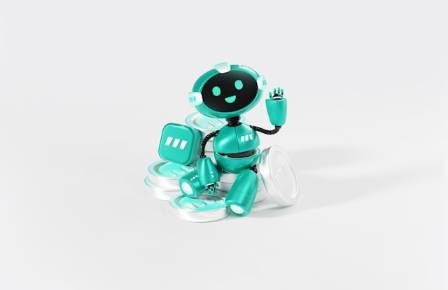
Adorable Robots That Charm More Than They Think
When people imagine robots, they often picture one of two extremes: lovable little companions or intimidating machines straight out of a science-fiction nightmare.
Alex Morgan
Temple note
Layer tip
The full corridor digest continues below along soft meter ticks.
Path
Temple Corridor
When people imagine robots, they often picture one of two extremes: lovable little companions or intimidating machines straight out of a science-fiction nightmare.
Thankfully, the robots featured here belong firmly in the first category. While some machines may one day become highly intelligent, many are simply designed to entertain, assist, and brighten people's lives. From robotic pets to musical performers and educational assistants, these creations demonstrate the softer side of robotics.
NEC PaPeRo
Created by the Japanese technology firm NEC, PaPeRo—short for "Partner-type Personal Robot"—was designed as a friendly household companion that helps users access online information in a more natural way.
The robot can understand and speak more than 3,000 words, alert users to new messages, provide current information, identify faces, transmit video messages, participate in games, dance, and even control certain electronic appliances remotely.
PaPeRo's hardware includes two camera-equipped eyes, four microphones that function as ears, an ultrasonic sensor in its body for obstacle detection, and a three-wheel mobility system. One of its most interesting features is its adaptive behavior. The robot develops different personality traits depending on how people interact with it. If ignored, it becomes sluggish and inactive. If engaged regularly, it grows more attentive and diligent. Although still a prototype, PaPeRo has never been released commercially.
Yume Neko
For cat lovers who struggle with allergies, Sega's Yume Neko may be an attractive alternative. The name translates to "Dream Cat," and this robotic feline imitates many behaviors of a real pet cat.
Modeled after a Norwegian Forest Cat, Yume Neko Venus contains a light sensor hidden in its forehead, touch sensors distributed across its body, and microphones that allow it to respond to spoken commands. For instance, when certain Japanese phrases are spoken, the robot responds by purring.
Like a living pet, it can move, rest, and react to physical interaction. If left alone for long periods, it enters a sleep mode to conserve energy. The robot has been sold in Japan for approximately 10,000 yen, while specialty import stores have offered it for around $176.
E.M.A. Robot
Another creation from Sega Toys is E.M.A., whose name stands for Eternal Maiden Actualization and is pronounced "Emma."
This interactive robot has a playful personality and even includes a "love mode." When a person moves close to it, the robot simulates a kiss. Standing roughly 15 inches tall and powered by batteries, E.M.A. uses specially designed leg joints that create a swaying motion while walking.
In addition to moving around, it can sing songs, dance routines, greet people, and distribute business cards. Infrared sensors help it avoid obstacles while performing its various actions. Marketed primarily toward adults, E.M.A. originally sold for about $175.

Sony AIBO
Those who want the companionship of a dog without the responsibilities of pet ownership might appreciate Sony's AIBO.
The name stands for Artificial Intelligence Robot, and this robotic canine can learn from its surroundings and interactions. With its futuristic appearance and metallic finish, AIBO resembles a dog from a science-fiction setting. It was offered in multiple colors, including white, black, silver, blue, red, green, and gold.
Beyond serving as a digital pet, AIBO became a popular platform for artificial intelligence research. Sony even released software development tools that allowed hobbyists and researchers to create their own programs for the robot. First introduced in 1999, AIBO production ended in 2006, though technical support continued for several years afterward.
Tweenbots
Unlike many robots that rely on sophisticated technology, Tweenbots were intentionally simple. Created by New York University student Kacie Kinzer, these small cardboard robots formed the basis of a social experiment.
Each robot could only move forward at a constant speed. They featured hand-drawn smiling faces and carried flags displaying their intended destinations along with requests for assistance from passersby.
Kinzer released the robots throughout Manhattan to observe how strangers would respond. Contrary to common stereotypes about New Yorkers, the public proved remarkably helpful. Every Tweenbot successfully reached its destination without being damaged or lost. In many cases, people went beyond the instructions, protecting the robots from potentially dangerous situations such as traffic. Their innocent appearance undoubtedly contributed to their success. Tweenbots were experimental creations and were never sold commercially.
Keepon
Keepon is a small yellow robot that resembles a cheerful snowman and was developed by Hideki Kozima of Kyoto's National Institute of Information and Communications Technology together with Marek Michalowski from Carnegie Mellon University's Robotics Institute.
Originally designed to support research into child development and human-robot interaction, Keepon uses two camera eyes, a microphone nose, and four motors to communicate through simple movements and gestures.
The robot became especially effective when working with children who have developmental conditions such as autism. Its success in these interactions earned it Carnegie Mellon's "Smiley Award." Keepon also gained online popularity through videos showing it dancing to music. Intended mainly for research organizations, the robot carries a price tag of approximately $30,000.
Tiro
Tiro is a humanoid service robot developed through cooperation between Hanool Robotics and several science universities in South Korea.
Equipped with an LED display face and advanced interaction capabilities, Tiro has taken on multiple roles. It has served as an English instructor in elementary schools, conducting lessons and asking students questions such as counting animals shown on classroom boards.
The robot has even participated in wedding ceremonies. At one event, it acted as both officiant and master of ceremonies, while additional robots assisted guests and handled supporting duties. Tiro's cost is around 200 million Korean won, equivalent to roughly $176,400.
Fujitsu HOAP-3
Fujitsu's HOAP-3 is a compact humanoid robot built primarily for research into human-machine interaction and adaptation.
The robot learns by observing people, copying movements, and remembering physical manipulations performed by users. Researchers use it to examine how effectively robots can function within environments designed for humans.
Standing about 60 centimeters tall, HOAP-3 operates using an RT-Linux system powered by a 1.1 GHz Pentium M processor. Its extensive hardware includes dual cameras, a microphone, accelerometers, distance sensors, force sensors, foot sensors, and LED-based expression displays. With 28 joints and support for speech recognition, speech synthesis, and remote control, it represents a highly capable research platform. No official retail price has been publicly established.
Toshiba Wheelie Robot
The Wheelie robot developed by Toshiba combines practicality with an appealing appearance. Its design resembles a futuristic household assistant and features a flat surface on top that can transport small objects.
While it cannot pick items up independently, it can carry things such as snacks, beverages, or remote controls from one room to another once they are placed on its head-like platform.
Wheelie moves using two main wheels and employs retractable stabilizing supports at both the front and rear to prevent tipping. Stereo cameras and a laser range-finding system help it navigate around furniture and avoid collisions. Although still limited in functionality and never offered for commercial sale, Wheelie represents an interesting step toward helpful household robots of the future.
More along this corridor
MID · en

Van Gogh Starry Night Woven Tapestry
One of Vincent van Gogh’s most celebrated masterpieces has been beautifully recreated as an elegant woven wall tapestry. The intricate textile construction highlights the swirling stars, luminous moon, and dynamic movement of the famous night sky, bringing new depth and texture to this iconic artwork.
MID · en

How to Make Milkshakes
Strawberry? Peppermint fudge? Banana? Whatever flavor you crave, you can make it at home! Our step-by-step guide (with pictures) shows you how to whip up creamy, delicious milkshakes from scratch.
MID · en

The Healing Power of Art and Drawing
Stuck one evening in heavy traffic on Santa Monica Boulevard, exhausted physician Kurlen Payton, MD, noticed a green-and-gold ficus tree glowing under streetlights. At the time, he was in the early stage of his career as a neonatal intensive care specialist at Cedars-Sinai and raising two young children. That brief moment inspired him to make a quick sketch—and that single drawing marked the beginning of a lasting habit.
MID · en

7 Most Expensive Skyscrapers Ever Built
Skyscrapers are not only feats of engineering but also financial marvels. Some towers cost billions to complete, combining cutting-edge technology, bold design, and staggering amounts of material. Here’s a look at seven of the priciest skyscrapers on Earth and what makes them stand out.
MID · en

How to Draw a Hot Air Balloon Easily
Looking for a simple way to draw a hot air balloon? You’re in the right place! Whether you’re a complete beginner or helping kids explore creativity, this easy step-by-step tutorial is perfect for all ages.
MID · en
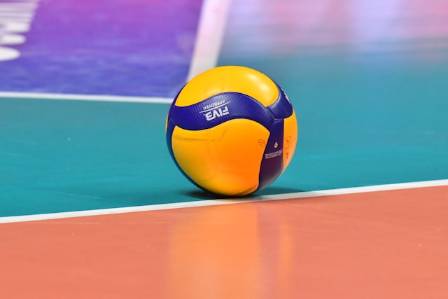
10 Best Volleyball Games on PC
Experience the thrill of volleyball from your PC! These games bring the excitement of the court to your screen, offering everything from realistic simulations to fun, arcade-style action.