Corridor read
Essential Facts and Characteristics of the House Sparrow
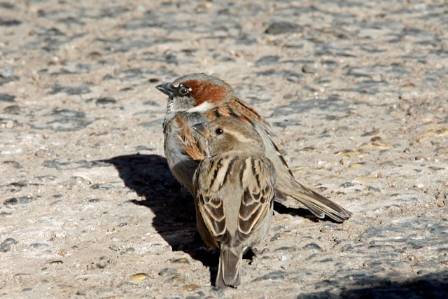
The House Sparrow is one of the most widespread and resilient avian species in the world. Originally native to Eurasia and Northern Africa, these birds have expanded their territory alongside human civilization, successfully inhabiting every continent on Earth with the exception of Antarctica. Their presence is so closely linked to human activity that a low sparrow population in a specific area almost always reflects a sparse human population as well.
Zoe Penelope Bryant
Temple note
Layer tip
The full corridor digest continues below along soft meter ticks.
Path
Temple Corridor
The House Sparrow is one of the most widespread and resilient avian species in the world. Originally native to Eurasia and Northern Africa, these birds have expanded their territory alongside human civilization, successfully inhabiting every continent on Earth with the exception of Antarctica. Their presence is so closely linked to human activity that a low sparrow population in a specific area almost always reflects a sparse human population as well.
Extreme Adaptability and Historical Expansion
House Sparrows are renowned for their incredible ability to thrive in diverse and extreme environments. In the United States, they have been documented living in Death Valley, California, at 280 feet below sea level, as well as in the Rocky Mountains at elevations exceeding 10,000 feet. Perhaps most impressively, a population was found living and reproducing within a coal mine in Yorkshire, England, over 700 feet beneath the earth's surface, where they were sustained by food provided by miners.
Despite their current ubiquity, House Sparrows are not native to North America. They were first introduced to the continent from England in 1851, starting with a small group released in Brooklyn, New York. In just under two centuries, their numbers have exploded from zero to an estimated 150 million across North America.
Regional Declines and Survival Challenges
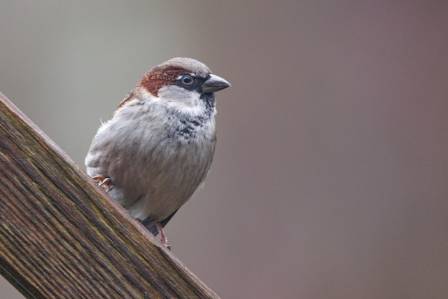
While they are thriving in many regions, House Sparrows are facing a significant and widespread decline across much of Western Europe. In London alone, the population plummeted by 60% over a six-year period. Researchers suggest that modern farming techniques, which leave less waste grain in fields, and the rising use of pesticides in city gardens are primary contributors to this downward trend.
Survival remains difficult for the species regardless of location. Although a House Sparrow can live for over 13 years, the mortality rate is high; less than a quarter of young birds survive their first year, and approximately 40% of the adult population perishes annually. Due to their status as an introduced species, the House Sparrow is one of only three birds—alongside the pigeon and the European Starling—that does not receive protection from the United States government.
Unique Behaviors and Physical Traits
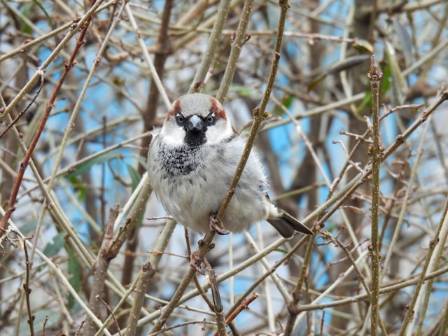
House Sparrows exhibit several interesting physical behaviors. When navigating the ground, they typically move by hopping rather than walking. Walking is a rare sight and is generally only observed in much older birds. Additionally, while they are land-based birds, they possess the ability to swim if their survival depends on it. In some instances, they have even been seen swimming beneath the surface of the water to evade immediate threats.
More along this corridor
MID · en

The Europaturm in Frankfurt
Standing tall in the heart of Frankfurt, the Europaturm is one of the city’s most recognizable landmarks. Often referred to as the "European Tower," this impressive structure dominates the skyline and serves as a key telecommunications hub. Its unique design and historical significance make it a point of interest for both locals and visitors.
MID · en

Tracing the Chronicles of the Telescope: A Voyage through Space and Time
The Telescope has earned its place as an invaluable scientific instrument, profoundly altering our understanding of the world and the cosmos.
MID · en

The Colours of the Canton Tower
The Canton Tower stands on the southern bank of the Pearl River and serves as one of Guangzhou’s defining landmarks. Rising to about 1,968 feet (600 meters), it is the tallest tower in China and ranks among the highest in the world. From its upper levels, visitors can enjoy sweeping panoramic views of the entire city, along with a variety of adrenaline-filled attractions located near the summit.
MID · en
Ancient Villages of Northern Syria
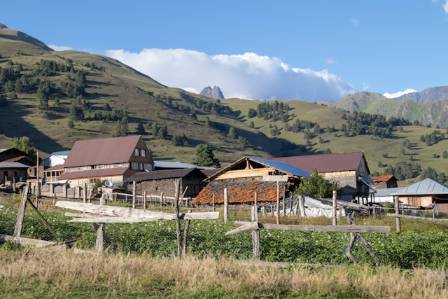
Located in northwestern Syria, the Ancient Villages of Northern Syria consist of around 40 historic settlements spread across eight archaeological parks. These villages provide exceptional evidence of rural communities and daily life during Late Antiquity and the Byzantine period.
MID · en

The Enduring Elegance of Timber: Why Wooden Cabinets Are the Heart of Every Home
Few furnishings strike the perfect balance between utility and beauty quite like wooden cabinets. Transcending fleeting trends, they have cemented their status as a cornerstone of interior design across generations. Whether gracing a kitchen, anchoring a bedroom, or organizing a hallway, wooden cabinetry offers a unique blend of warmth, familiarity, and sophistication that synthetic materials struggle to emulate.
MID · en

5 Fashion Trends Expected to Dominate in 2024, According to Fashion Experts
As we step into the new year, it's an opportune moment to reassess your wardrobe, identifying items that may be veering toward outdated, those ripe for reinvention, and pieces poised for inclusion. In 2024, style mavens anticipate a continuation of '90s-inspired fashion, embracing jelly accessories and collegiate prep, alongside unexpected influences such as grandpa chic, jazz, and retro femininity.